19.11.2026 · Innovation, Business Insights
Interview with Philipp Schoch, CEO of Wincasa
As Switzerland’s largest real estate service provider, Wincasa aims to respond proactively to constantly changing market dynamics and, with its Strategy 2030, break new ground in property management. This includes new fields of activity and products, as CEO Philipp Schoch explains.
Property management today is caught between increasing regulatory pressure, technological change and shifting economic conditions. Where is the pressure greatest?
Philipp Schoch: These tensions are not new – they have been around for several years. What is new, however, is that all these demands are arising at the same time: client expectations, requirements, regulations and, of course, the big question of how AI will transform the real estate industry. These are issues we are tackling head-on. At Wincasa, we are well positioned for these changes. On the one hand, we have invested heavily in digitalisation over the past six years to lay the foundation for automation. On the other hand, with our Target Operating Model (TOM), we have successfully separated property management into residential and commercial properties.
So what’s next?
We developed our Strategy 2030 and launched it in September. It will help us continue to grow in the future.
What does it look like in detail?
We are focusing on four strategic priorities: Performance, Growth, Business Innovation, and People & Culture. Our employees are the heart of our organisation, and we want to develop measures to ensure that we remain an attractive employer in the future. Staff turnover is still a major issue in property management. The Growth priority is about tapping into new, attractive segments and markets in which we are not yet active, while the Business Innovation priority is about further developing our range of services for our existing clients.
Tools such as artificial intelligence are fundamentally changing property management. This also gives rise to fears. How great is the risk of no longer being competitive?
We take these developments very seriously. AI will significantly accelerate many administrative processes and, in some cases, automate them completely. New possibilities are emerging for analysis, customer service and preparing the basis for decision-making. Anyone who ignores this development will be at a competitive disadvantage in the medium term. How are we dealing with it? Within the Performance priority of our Strategy 2030, we have integrated the use of AI to optimise our processes. At the same time, we are convinced that AI will not replace people. Property management is very much a business built on emotions and trust. Success will come to those who intelligently bring technology and people together.
Some employees, however, are very apprehensive about consistently integrating AI into their day-to-day work.
We have two tasks to address here. First: how do we enable each employee to use the AI tools available? In other words, how can they use AI solutions to make their daily work easier and automate standard tasks? And second, as a company, we need to build an agent platform to automate high-volume processes with fiduciary quality. The latter is set up by specialists for each individual and for the company as a whole; the former is something each employee needs to use and apply as effectively as possible for themselves.
Like many other companies, you are under pressure to innovate. How far along is Wincasa with AI?
In the last strategy cycle, which ran until 2026, we placed a strong focus on digitalisation. Products such as Wincasa Home, the new ERP system, the Contact Center and the e-rental agreement were developed and successfully implemented during this period – as was, of course, the TOM project. We are therefore very well positioned and have a solid foundation for taking the next step. Thanks to our strong data foundation, we can now drive forward the use of AI – moving from digitalisation to automation. AI must not become an end in itself; it has to deliver added value and better quality in everyday life for its users – tenants, owners and, of course, our employees. Our business is still a people business. People play an important role, even if more can be automated with AI in high-volume business.
Implementing sustainability criteria (ESG guidelines) is another complex task. What is the situation in Switzerland?
Switzerland has the federal government’s climate strategy, which sets out the targets. Implementing the measures needed to achieve these climate targets is highly complex. Most companies in the real estate industry are committed to meeting these requirements. We are seeing that regulations have become stricter and will continue to tighten until 2050. And regulations differ from canton to canton. International standards are another important factor, as they influence Swiss requirements. ESG is a very important topic for our clients. Due to changes in global politics, the topic has lost some of its priority. However, our clients come mainly from the institutional sector, where long-term planning matters and day-to-day geopolitical developments take a back seat. ESG therefore remains on the agenda and is increasingly becoming a standard requirement in operations.
Tenants – international companies in particular – are increasingly demanding green leases, which contractually require sustainable operation of the property. Is this creating new pressure?
We are not seeing any pressure. But it is true that larger international and national companies are asking for green leases. Their design, however, is not standardised – no standard market contract has become established yet. For property management, a green lease clause in a lease agreement is an exciting development. We need to engage with these tenants regularly and establish monitoring so that we can achieve the sustainability targets together. We believe this topic will continue to grow in importance.
Managing real estate is becoming more demanding, while resources are becoming scarcer. How badly is Wincasa affected by the shortage of skilled workers?
The skills shortage affects us too, of course. Qualified property managers with the relevant training and professional experience remain in particularly high demand. The labour market in this area remains challenging and the pool of suitable professionals is limited. With our TOM project, however, we have reorganised property management and made roles more specialised. Focusing on residential and commercial properties allows our employees to apply their expertise in a more targeted way and to meet client needs even better. At the same time, this specialisation opens up new opportunities in recruitment. Overall, the skills shortage remains a challenge. Thanks to our organisational development, however, we are better prepared and can fill vacancies in a more targeted way.
A quick question about you personally: you have been CEO of Wincasa for over a year. What visions are you focusing on?
My vision is to consistently implement the goals of our Strategy 2030 and to develop Wincasa in a future-oriented way. To do this, we are building on a strong foundation and investing specifically in client focus, the development of our employees and the meaningful use of technology. Our brand refresh is a visible expression of this development. It stands for what we want to be: more modern, more approachable and even more focused on the needs of our clients. For me, it is another step on our journey. We have a lot planned and in many areas we are only just getting started. Together, we want to seize new opportunities, build on proven strengths and strengthen our position as Switzerland’s leading real estate service provider in the long term.
What specifically would you like to implement?
Within the four strategic priorities, we have defined various concrete measures that we intend to implement consistently. I find the development of new services particularly exciting, as they allow us to respond to social and market changes. City Management is a good example. With our experience in Real Estate Community Management and neighbourhood coaching, we already have skills that cities and municipalities are increasingly looking for. Our goal is to expand this role further and to support cities, municipalities and other stakeholders as a sparring partner – for example on questions of neighbourhood development, revitalising town centres or real estate-related issues. We see great potential here to contribute our expertise even more in the future. But there are many other topics that we will tackle concretely from 2027 onwards.
Densification projects can also lead to social tensions within properties and housing developments. You try to address these through good communication and services in Real Estate Community Management and neighbourhood coaching. Isn’t this task becoming increasingly challenging given the current housing shortage?
Where housing is scarce, expectations of property management rise and discussions become emotional more quickly. This makes transparent communication and the early involvement of the people affected all the more important. We have had very good experiences with our Real Estate Community Management and neighbourhood coaching. In densification projects in particular, these approaches help to encourage dialogue, take up concerns at an early stage and defuse potential conflicts. Because where people meet and exchange ideas, mutual understanding grows – and ultimately there are fewer tensions in living together.
Interview: Remi Buchschacher für den Real Estate Report November 2026
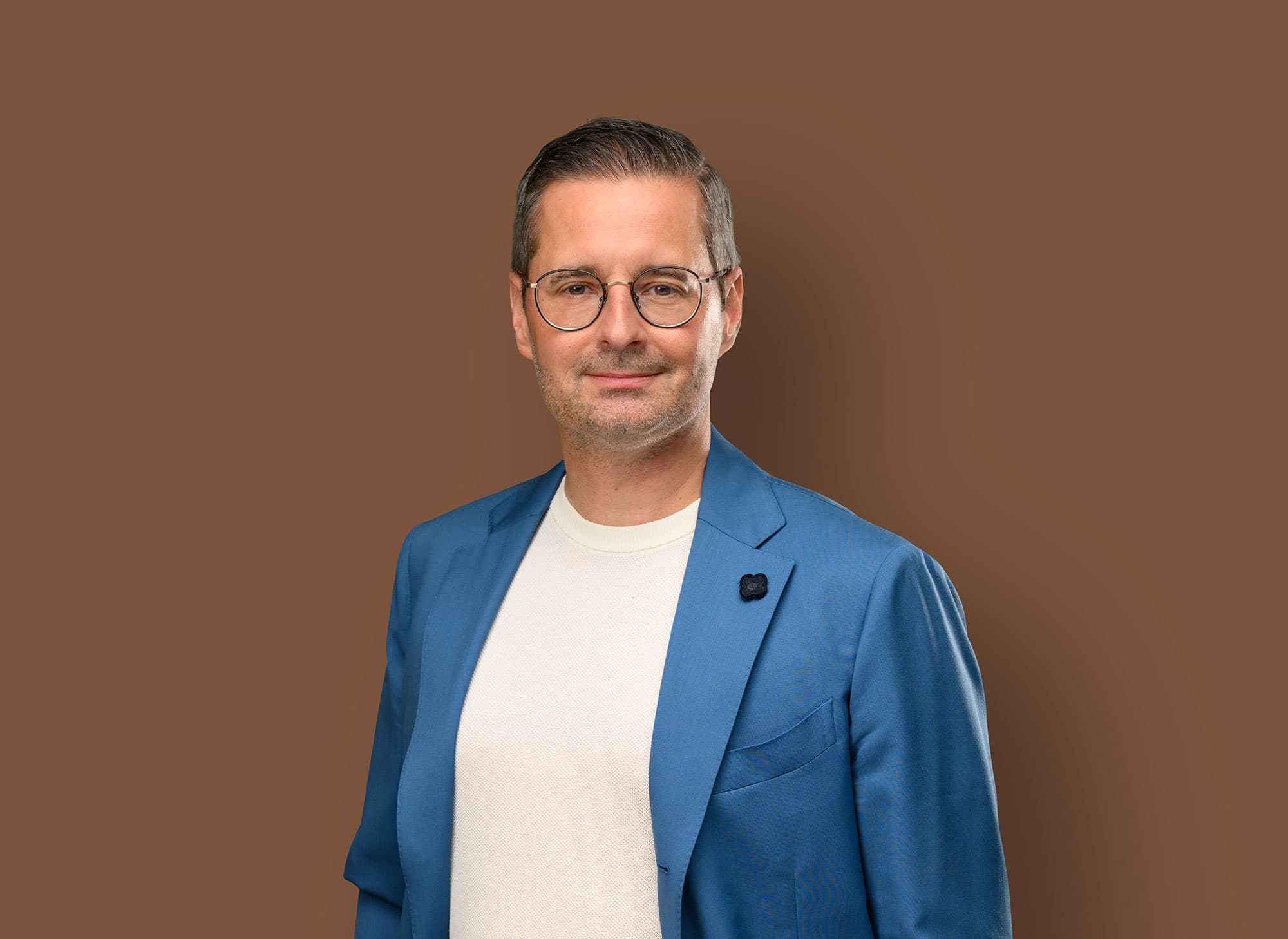
Philipp Schoch
Philipp Schoch has been CEO of Wincasa AG since July 2025 and has been a member of the company’s Executive Board since 2015. He has more than 15 years of experience in various management positions at Wincasa – including as Head of Sihlcity, as the person responsible for Center and Mixed-Use Site Management and, most recently, as Head of Property Management. Philipp Schoch holds a degree in Business Administration (University of Applied Sciences), an Executive MBA in General Management (HWZ) and a CAS in Board of Directors. He has completed various further training programmes at CUREM and lectures in Retail & Property Management.